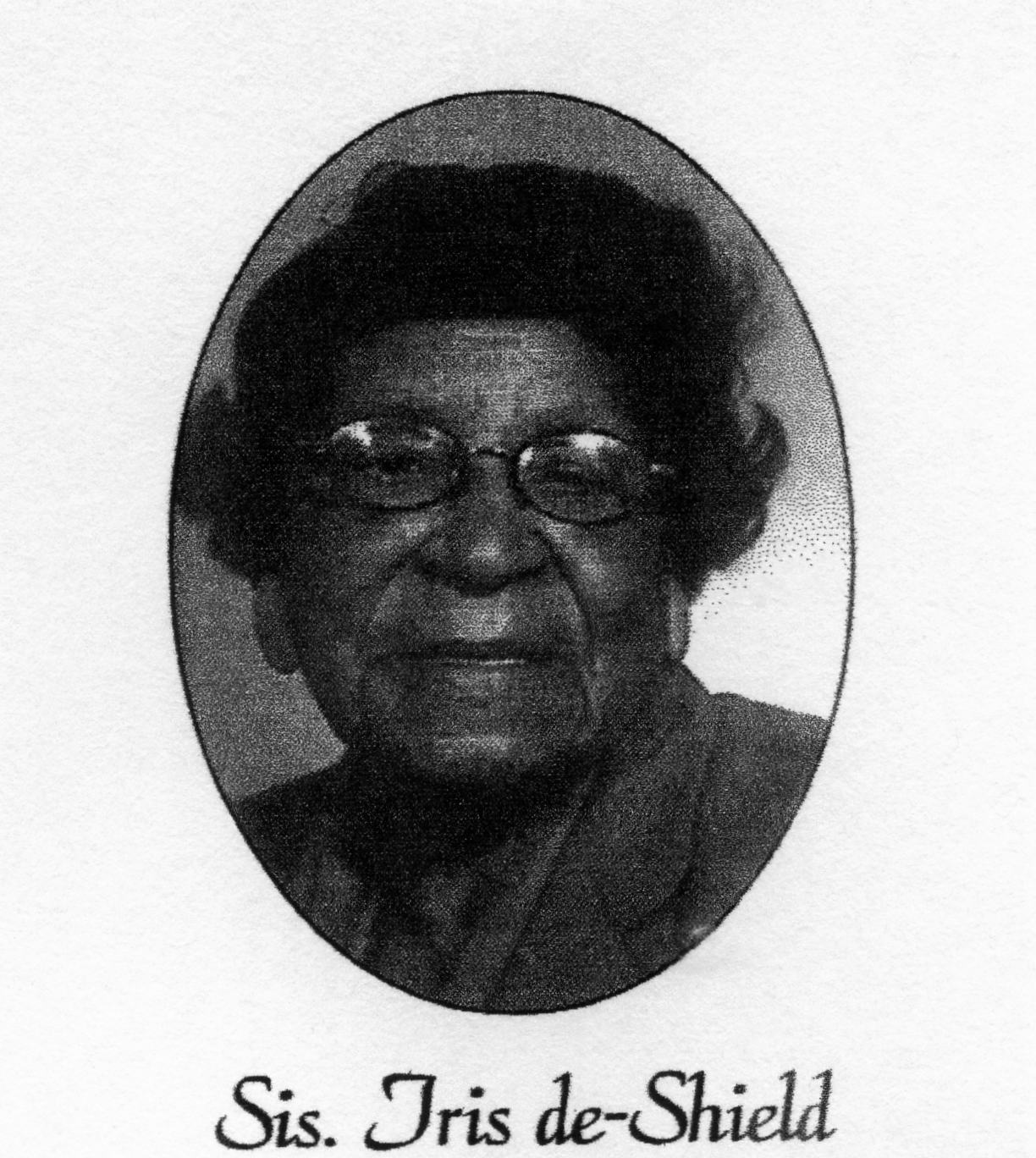
 Iris Mae deShield was born to Thomas and Annie Jones Phillips. She received her early education from Ms. Edith Crawford and Rufus J Stovell. Iris had the desire to go into the nursing field but her parents had other plans for her. They were in the Tailoring and Dressing Making Industry, and needed her to help them run their business. She obediently followed their lead and became gifted in the art of tailoring and professional designing. She studied for several years under the guidance of her father and developed the skills required for her creative craft which was “good workmanship, accuracy, and attention to detail.” Iris was recognized for her abilities and this was demonstrated at the Woman’s Shop (now known as Gibbons Company ) where she supervised the designing of garments for the display window for several years. She continued to develop her skills in her profession and soon opened her own business known as the Fashion House on Church Street. She was able to hire three assistants and her business thrived. She created many fashions for prominent people among them Mrs. Sheila Leather the wife of the serving governor at that time Sir Edward Leather.
In 1938 she married George Arthur deShield, and of this union had three sons. After some years Iris ventured into the teaching field and began that career at the Girls Institute where she remained for several years making the students blazers and teaching tailoring. She moved on to Prospect School for Girls and later to Sandy’s Secondary School where she instituted a new class room to teach sewing. The students were taught to make designer garments, pillowcases, and other arts and craft projects which were later displayed for purchase. She enlisted the services of inmates to make her some cutting tables. While at Sandy’s Secondary she was instrumental in developing a charm school course, the first in a secondary school it was a venture that became very successful. Upon retirement from the school Iris used her talent in many ways and in 1966 she presented “Extravaganza of Style” for stout women creating one of a kind garments. She was later hired to make shrouds for the deceased at Cecil Frith’s Funeral Home on Ewing Street. She took a course in Millinery and received a Diploma from the Academy of Millinery Design, qualifying her as a professional Custom Millinery. Iris was very much involved in church and she became a stanch member of St. Paul A.M.E. on Victoria and Court Streets. She was active in the Senior Choir, Steward Board, and Missionary Society. She was elected to the office of Conference Branch President. She gave of herself to her community serving as Chaplin of the Business and Professional Women’s Club, member of the Sunshine League, President of the Socratic Literary Club, President of the Gay Nineties Club , Secretary of the Sunshine Garden Club, a life member of the Bermuda Garden Club a member of National Trust Tree Committee. She was a founding member and President of the Fellowship Circle, a founding member of the ladies Auxiliary of the Matilda Smith Williams Senior Residence. She was also an active member of the Star of Warwick Lodge N0.3 and a member of the Commission of Charities. Iris hobbies included travelling, gardening, singing and poetry. Iris had a lovely quote centered around her life. “Sewing is my life, take sewing from me and my work is done. Well done church sister your living was not in vain.



 Inez Ruth Caroline Kennedy was the eldest daughter of Arthur and Ada Kennedy. She grew up on Sea Gull Lane in Spanish Point. Both her parents were teachers and encouraged her to excel in school. Inez attended the Berkeley Institute and the Excelsior Secondary School. At age seventeen she began teaching privately and in 1938 she was appointed assistant teacher at the Temperance Hall School in Hamilton Parish. In 1941 she transferred to the West Pembroke Primary School where she remained until 1944. She entered Teachers College at Columbia University, earning a diploma in early education. Upon returning home she accepted a post at the Francis Patton School where she taught for twenty-five years. She was famous for her Christmas plays and under her guidance students, teachers and parents participated in the productions which raised much needed funds for the school. Inez was an expert at teaching with one hand and making costumes with the other. She was known for always having extra art work displayed in her class room. She eventually rose to the position of deputy head and on occasion served as acting principal. In 1979 she received the Service award from Francis Patton School for faithful,devoted and valuable service. Inez Kennedy excelled in other areas she was a gifted tennis player. She became involved in the sport when she was a teenager and played competitively until her thirties. She captured the Somers Isle Lawn Tennis Association Ladies Singles title, the Unity Club Ladies Championship and several other trophies. Inez believed in family and at the loss of one of her siblings she encouraged her nieces to further their education and supported them in their endeavors. They excelled one becoming a teacher, one a nurse and the other a legal Secretary. On contemplating retirement in 1975 she was presented with a new challenge. Inez took on the job of teacher -librarian at the Ruth Seaton James Auditorium Library. During her summer recess she continued her studies at teacher’s college Columbia University and Ontario College in Canada. There was another side to Inez’s life, that off her spiritual learning. She worshiped at the St. Paul. A.M. E church where her love for children led her to serve as a Sunday school teacher. There she taught for over twenty years becoming District and then Conference Superintendent. In 1972 she was presented with the church’s highest lay award “The Richard Allen Award” for outstanding services in the church and community. She was also chosen as the Outstanding Christian woman of the year. She was an avid gardener , loved fishing off the rocks in her Spanish point area and loved to travel. She explored Italy, Egypt, India the Orient and many other places. Hers was a life most loved and well lived.
 Glenn was born into a family of history makers and example his father Glenn Blakeney became a politician of one of Bermuda’s major political parties joining many other family relations in their quest to contribute to their country.It has been recorded that at the tender age of 14 years Glenn was showing his prowess as an up and coming cricket player to be watched. He was at that time associated with the Hamilton Parish Club. Glenn was left handed and was instantly noticed at his young age as an outstanding player. He was an impressionable cricketer with a winning smile. More than likely he was one of those teenager that had his heart sat on the sport he wanted to become involved with and nothing would change his mind. One would know that he was a force to be reckoned with in early school. Glenn made a debut half century in the pre-cursor to the Red Strip Bowl in the West Indies. Notable he left much for Bermuda to talk about in his cricket exploits. He loved the Eastern Counties and Cup-match. In August 2001 he made a double century and a triple century a year later, and to prove his prowess he made another double hundred in 2011 on the field at the Eastern Counties. It is no surprise that he was involved with several sports clubs. Who would not want to be noted as knowing him with his impressionable personality and sportsmanship? In spite of fighting a serious illness Glenn did not let this dampen his spirits and he played on. In 2012 he was presented with the Bermuda Friendly Societies Sportsmanship award,which included The Clarence Darrell Memorial Cup donated by the great-grandson (Dr. Ewart Brown ,JP. MP.) A plaque and several other gifts for his achievements. He joined the ranks of several others such as, Clay Smith, Stephan Kelly,O.J.Pitcher,Janerio Tucker,Terryn Fray, Kyle Hodsoll and Dexter Baisden to name a few. There are times one gives their all and receives little praise. Glenn worked well throughout his sport with vigor love and enjoyment. He had reached his dream. He left a legacy for all to remember. Some suffer in silence and smile and accept the pitfalls that life had to offer. He will always be remembered by his family, friends and colleagues for his contributions to the game of cricket and life in general. Some would say he is gone too soon, but some of the greatest rewards are received beyond this veil. Well done Glenn like so many others you will always be remembered.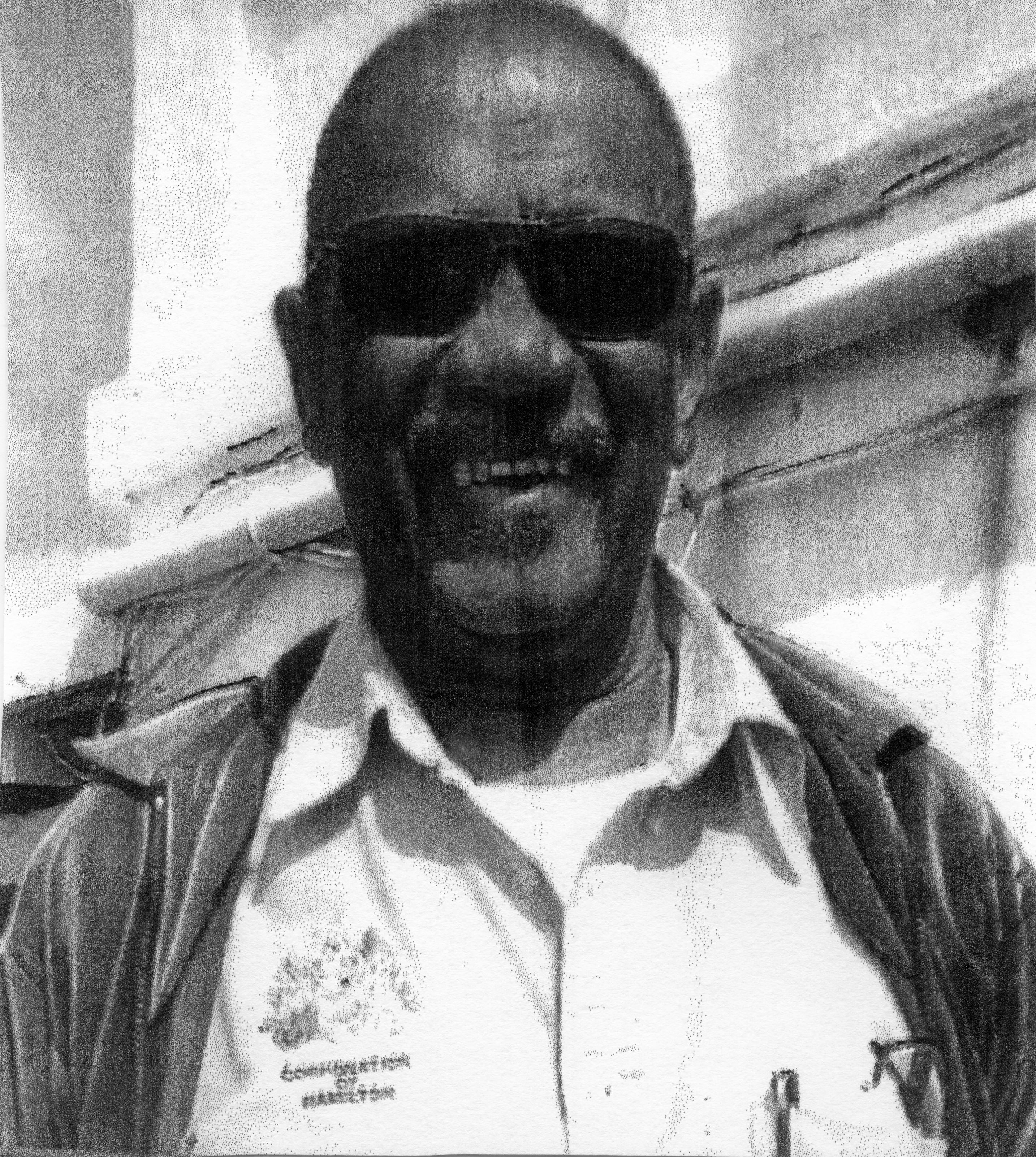
 Today players would do well to emulate his gentlemanly conduct. He earned the highest respect as a gentleman and sports personality.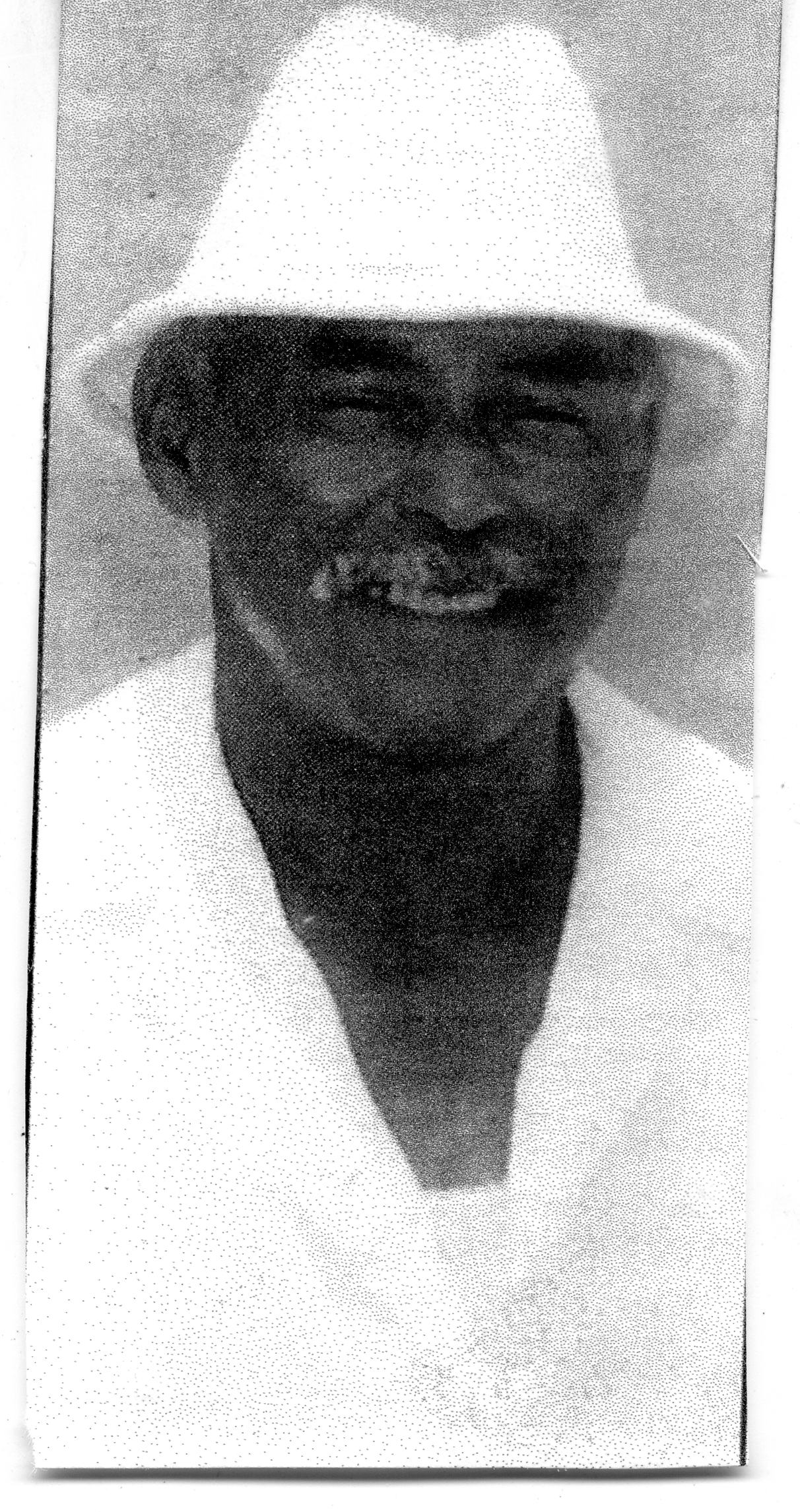
 bermudaheritagemuseum